Aquaculture

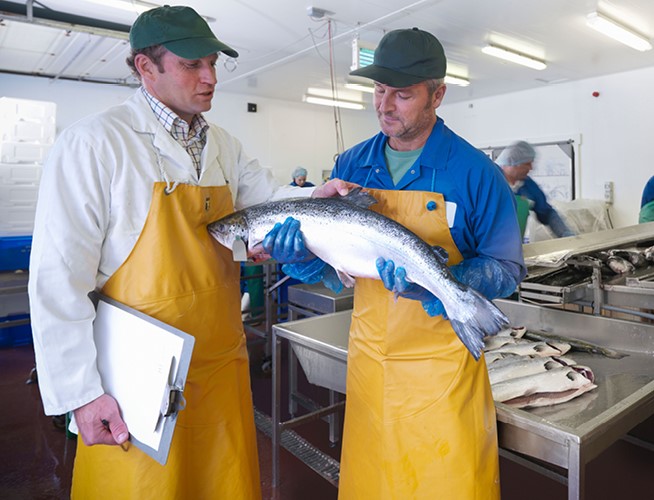
We often forget that fish is one of the last hunted species. It is a recognised fact that production of seafood from aquaculture will increasingly fill the gap between the demand and the supply from wild capture fisheries. With a global population of 6.5 billion and a prediction of 9 billion by 2050, it will become a necessity to produce more and more aquaculture product from seas, rivers and lakes. Almost half of fish consumed worldwide is from aquaculture.  On a global basis, wild stocks represent a finite resource with several stocks on the decline or suffering from fishing pressures.

A wide range of freshwater and marine animals and plants are produced by the aquaculture industry worldwide.

Familiar examples include Salmon, Trout, Warmwater Prawns, Sea Bass, Sea Bream, Turbot, Tilapia, Native and Pacific Oysters (indeed Oysters have been cultivated since Roman times!), Scallops and Mussels. Seaweed farming is also increasing in popularity. Further species being farmed in increasing quantities include Cod and Halibut.

The different aquaculture terms are:

  • Farmed - Eggs are bred in captivity and grown through to harvest e.g. Salmon, Cod.
  • Sea Reared or Sea Ranching - Young stock are caught in the wild and then grown on to harvest e.g. Mussels.
  • Sea Ranging or Seeding - Juveniles are bred in captivity and then released into the wild. A small percentage (2-5%) are subsequently caught when they mature e.g. Lobsters.

The cooler coastal waters of the UK are well suited to the cultivation of marine fish species, such as Cod, Halibut, and bivalve shellfish species, such as Blue Mussels, Oysters and Clams. While Turbot, Sea Bass and Sea Bream are more suited to warmer water conditions such as those found in the Mediterranean, they can be grown in the UK in land-based, temperature-controlled, recirculation systems.

Less familiar species, which may enter the UK market in the future, are Moi (Hawaii), Pompano (Florida) and Paddle Fish (China). Pangasius or River Cobbler, which is a fresh water species, is farmed extensively in Vietnam. This has become popular in the UK, especially in batter as a substitute for Cod and Haddock.

As well as helping to reduce our reliance on wild stocks, developing a thriving aquaculture industry in the UK will also help to retain skills and infrastructure in rural coastal communities dependent on fishing.

For caterers, aquaculture ensures a year-round, regular supply of fish, that are consistent in size (giving better portion control) and quality (taste, colour & texture). It also gives increased peace of mind. Seafood produced from aquaculture has full traceability from ‘farm to fork’ - all movements of fish and shellfish on and off cultivation sites must be recorded. Fish and shellfish farms in the UK and Europe have to be registered by law, ensuring they are inspected regularly as disease control and welfare issues are very important. All shellfish have to meet strict health and hygiene regulations before they can be sold.

Environmental issues in the media are often unfounded or blown out of proportion. It is in the industry’s interest to maintain a healthy environment, and the industry comes together and is continually working to maintain standards and further develop sustainable fishing.

The ratio of wild capture fish used in the feed for aquaculture species has often been quoted as high as 10 to 1. The reality is that massive improvements in our knowledge as to the nutritional requirements of aquacultured species means that wild capture fish can now make up less than 15% of the total feed recipe and indeed, most freshwater species are herbivores, requiring no wild capture fish at all in their feed, whilst Mussels and Scallops filter their feed from sea water.

Current initiatives include:

  • Developing and promoting codes of practice to ensure cultivation sites and the stock on them are well managed.
  • Addressing issues relating to the supply of fishmeal and fish oil in aquaculture feeds. Sourcing feeds from sustainable, managed and accredited industrial fisheries is becoming a priority, as is developing feeds that incorporate an increasing quantity of oils sourced from plants.
  • Investigating better utilisation of feed on site through the development of improved feeding systems.

Fact: The weight of Farmed Salmon in a pen is 2% whilst the weight of water is 98%!

Cookies

This site uses cookies. Some cookies are essential to ensure our website works for you in the best possible way. You may delete and block all cookies from this site, but parts of the site may not work. To find out more about cookies on this website and how to delete cookies, click here to see our cookie statement.

Close
DCSIMG